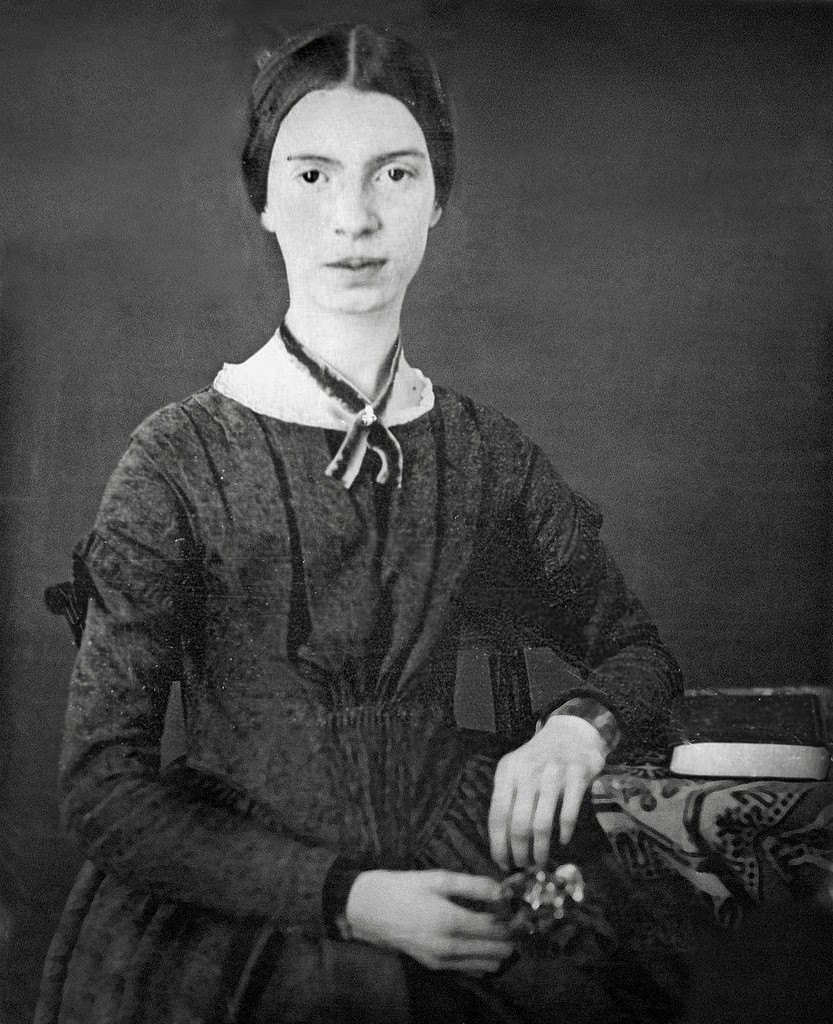
Madeleva Wolff, poetessa & badessa-“Dio ha un suo modo di far crescere i fiori”-Biblioteca DEA SABINA
Biblioteca DEA SABINA
Madeleva Wolff, poetessa & badessa-“Dio ha un suo modo di far crescere i fiori”-
Sister Madeleva Wolff was born in Cumberland, Wisconsin, in 1887, and christened Mary Evaline Wolff.[1] Her father, August Wolff, was a Lutheran and a saddle and harness maker, who was twice mayor of Cumberland. He read poetry to Mary Evaline. Madeleva’s mother, Lucy, was a devout Catholic. Mary Evaline learned how to handle pliers, tacks and hammers. She climbed thorn apple trees, diagrammed wildflowers and in winter ice-skated from morning to night. At school, she “lived to learn, and so lived richly,” she wrote in one of her books, My First Seventy Years.

Poesie di Sister Madeleva Wolff
Nei deserti luoghi
Dio ha un suo modo di far crescere
i fiori: è audace e diretto allo stesso tempo.
Se conoscessi i fiori
come me, non avresti dubbi.
Sceglie una pietra grigia, austera, impervia
per farne giardino; munge il sole
strema le intemperie – poi fende
il cielo con una penna, per metà
fiamma per metà piuma.
Negli impervi luoghi opera così:
dissotterra un piumaggio di petali
divina con sicurezza finché
un bocciolo, troppo fragile
per dargli nome, non esplode
furtivo.
Osa seminare nel deserto
ara le rocce. Sebbene Eden abbia
sperimentato il Suo potere e la Sua
bellezza, non sa come può
nascere il fiore del cactus.
*
Nel vento, uno spettro
Si vergognava, lo spettro:
uscì dalle ante del vento, trottava
all’alba e benché non potessi
vederlo né sentirlo, le sue labbra
mi sfiorarono la guancia, le sue
dita mi toccarono i capelli.
*
Ha modi semplici Dio:
preferisce la stalla
gli agnelli al pascolo
con i pastori. È così
umile che a mala pena
diresti che è un re.
Guardalo: fragile, puro
nella mangiatoia, sorride
in forma di bambino
mentre guarda la madre.
Non poi temere un Dio
dai modi così docili.
Eppure, ardono i cieli
e gli angeli urlano
scuotono i cembali. Davvero
egli è un Re e nella sua
semplicità ha i modi di un Dio.
*
Ultimatum
Lo sai: non puoi fermare la mia ricerca
non puoi esaudire il mio desiderio;
brucerei nel divino fuoco
il divino riposo mi empirebbe
per sollevarmi, viva, al vivo petto di Dio.
Non oso osare né aspirare tanto
non chiedo altro che il supremo amore:
il posseduto che di noi si impossessa.
Tu che sei tutto e non sei questo
resta il suo sogno, la sua dolce
e assoluta profezia che il risveglio
rende più vera e di te la più
audace malinconia; mie siano
le profondità dei tuoi occhi paghi
le pazienti mani, il bacio, silente.
*
Quieti umani
saggia gente che sa
i cieli e il loro amore
voi che ideate aerei e satelliti
con formule adatte a orientarvi
create per me la più grande stella.
Nella sua stiva mettete
ciò che vi dico – mettete
il truce verbo di un misero
locandiere, il letto di paglia
che sfida l’inverno
e il bastone del mandriano –
un tempo anche voi
eravate bambini: mettete
l’agnello, tre corone per tre
re e tutte le cose che chiamiamo
domestiche, i giocattoli per i bambini
del nostro misero mondo.
Non avete mai forgiato
una simile stella, ma null’altro
cercano gli umani. Voi che
conoscete i cieli e l’amore
impastate una stella
per il bene del Bimbo.
*
Considera i fiori del campo
il loro muto vestire
e sgargiante: ciascuno
ha una cella murata dal vento.
Pensa agli uccelli del cielo
alle cose illetterate e salvagge
alle cose che vivono nell’argento
del canto, libere, a cui basta
una briglia d’aria.
Considera la sapienza delle ali.
Ho visto la pace nei petali
l’ascesa feroce verso il sole.
Perché fiorire? Perché
intraprendere l’empireo?
So chi ha creato i rapaci
e i fiori: nelle sue mani
si schiude il bocciolo
e prende il volo ogni
alato essere.
*
Gorgoglio del corpo
la bocca balbetta di uno
splendore nuziale
in attesa dello Sposo.
Nulla può eguagliare l’innocente
rifugio che offro al Re. Beato
nulla, arredo per il mio Unico
una misera stanza:
il letto, la sedia, il tavolo
l’alone di una candela che lacera
l’oscurità. Dovrebbero esserci
fiori per allietare il Suo riposo
ma io dispongo di bianchi gigli
e dispiego il mio io su di Lui.
*
Perenne
L’ultimo canto selvaggio
della tua notte non può
essere scritto, l’ultima
parola non può essere
detta. Pastori troppo
fiacchi corrono da sempre
dietro gli angeli, di grotta
in grotta, seguaci della stella.
Sovrasti la schiavitù dei tempi
sei senza inizio né fine
e ti svegli tra le braccia
di una ragazza nell’infinita
notte. Parola di carne
puro sibilo, sei la nostra
accessibile luce.
Stanotte la notte è tua
e la costelli di canti.
Oltre la piana di Betlemme
i pastori attendono e dilaga
il gregge. Dio racconta ancora
la sua storia ai figli.

“Dio ha un suo modo di far crescere i fiori”. Madeleva Wolff, poetessa & badessa -Fonte Pangea- Rivista avventuriera di cultura & idee
Qualcuno ricordò che era “la badessa della poesia cattolica”; il “New York Times” che eccelleva nell’arte del ‘coccodrillo’ – ergo: rigore, esattezza, sana sobrietà, gusto per le sottigliezze – scrisse che “Sister Madeleva” era, nell’ordine, cattolica, insegnante, poetessa. Dei circa “settanta libri” che le sono ascritti, d’ogni sorta, quasi nessuno è stato più ripubblicato. “La sua reputazione come educatrice ha spesso offuscato la vasta produzione poetica”. “Sister Madeleva” morì nel luglio del 1964, a settantasette anni; eccelleva nell’inno, aveva studiato, con alto profitto, letteratura medioevale, specializzandosi in Chaucer. Nel 1942 era stata eletta presidente della “Catholic Poetry Society of America”.
Nata Mary Evaline Wolff a Cumberland, Wisconsin, nel 1887, da padre luterano e madre cattolica, diventò “Madeleva” nel 1905, dopo aver pronunciato i voti perpetui: scelse l’ordine delle Sisters of the Holy Cross. Aveva studiato al Saint Mary’s College di Notre Dame, Indiana, di cui diventò uno dei presidi più brillanti e audaci, dal 1934 al ’61. Ideò il primo corso di teologia aperto alle donne; “trasformò la piccola, severa, tradizionale scuola femminile in una istituzione moderna, che arrivò a contare oltre mille studentesse”. Quando accolse la prima allieva di colore, accerchiata dalle critiche, rispose a suo modo: “dite che diminuiranno le iscrizioni? Non vedo il problema: farò del Saint Mary’s College una scuola per donne nere”. Sapeva spiazzare, aveva il dono – apocalittico – delle frasi apodittiche; spesso diceva che “gli incidenti sono il modo in cui Dio si dimostra doppiamente buono con noi”.
Nella sua biblioteca privata, il “Beowulf” e William Langland dialogavano con Thomas S. Eliot, i versi del gesuita anarchico Daniel Berrigan erano al fianco dei mistici inglesi. Diceva che i libri della sua vita erano la Bibbia e un manuale di sementi. Da ragazza, Madeleva maneggiava pinze e martelli, amava il lavoro manuale, si arrampicava sugli alberi – sapeva pattinare sui laghi ghiacciati. Da adulta, si scriveva con R.H. Benson e Jacques Maritain, con Edith Warthon e John F. Kennedy. Dopo il dottorato a Berkeley, si perfezionò a Oxford: conobbe Tolkien, Martin D’Arcy e soprattutto C.S. Lewis. Cominciarono un rapporto epistolare; Lewis apprezzava i versi di Madeleva – “ha dissotterrato le radici della poesia medioevale piantandola nelle nostre menti contemporanee, dove può fiorire a suo piacere” – ma restava schivo, fino all’ironia nera, di fronte agli entusiasmi di lei. Così le scrive nel 1934: “Se mai dovessi trovarmi dalle sue parti (il che è alquanto improbabile), sfiderò il ‘terrore dei conventi’ per accettare la vostra gentile offerta di ospitalità”. Si scrissero fino alla morte di lui, scambiandosi idee sui reciproci libri, su vertiginose questioni di fede. Un tempo, l’autobiografia di Suor Madeleva, My First Seventy Years (pubblicata da Macmillan nel 1959) era considerato una specie di classico; in un recente repertorio uscito su “America. The Jesuit Review” Madeleva è detta Poet, feminist and nun. Le poche volte che la portavano in un centro commerciale era felice di ripetere quanto “è bello sapere che al mondo ci sono così tante cose che non desidero”. Thomas Merton, il poeta trappista, temeva il suo giudizio: era tra le rare persone a cui inviava i manoscritti prima della pubblicazione. Quanto alla sua poesia, Madeleva, più che altro, resta, con sapienza, nei rioni dell’innografia, perché dell’incanto biblico si nutre. L’edizione dei Collected Poems edita nel ’47 da Macmillan fu recensita da Marya Zaturenska, già premio Pulitzer ‘for Poetry’, sul “New York Times”; nell’articolo – “Music That Is Peace” – ne scaturisce un’analisi che vale ancora oggi. Verrebbe da dire: esiste un’ispirazione che esige la falce, un’ispirazione rettilinea, che fa a meno degli illusionismi lirici. Un verbo d’erba, che non ha rivestimenti né finiture – la storia della letteratura, a questo punto, è poco interessante, ha scarsa presa.

Sister Madeleva Wolff
The effusive praise was not limited, however, to local admirers. Pulitzer prize winner Bernard DeVoto was a fan. Sister Madeleva did post-doctoral work at Oxford under literary luminaries like J.R.R. Tolkien and C.S. Lewis. In 1951, she sent Lewis a copy of her work, which he described as “wholly delightful.”
Her delightful writing often was about Utah. In a 1926 letter, she happily told a Berkeley professor about an incident in a garden she planted here. She explained, “A meadowlark found himself a pulpit in an apple tree…and I immediately became his congregation.”
In another letter, Sister Madeleva told her Berkeley friend about Utah snow: “More soothing and restful than a long and dreamless sleep. It is falling now, profound white peace, deliberate and encompassing as eternity, as you participate vicariously in the benedictions of such tranquility.”
She also wrote poems about Utah’s mountains and deserts. My favorite is from a 1947 book of her collected works, reprinted in a paper for the Holy Cross History Association:
In Desert Places
God has a way of making flowers grow.
He is both daring and direct about it.
If you know half the flowers that I know,
You do not doubt it.
He chooses some gray rock, austere and high,
For garden-plot, traffics with sun and weather;
Then lifts an Indian paintbrush to the sky,
Half flame, half feather.
In desert places it is quite the same;
He delves at petal-pans, divinely, surely
Until a bud too shy to have a name
Blossoms demurely.
He dares to sow the waste, to plow the rock.
Though Eden knew His beauty and His power.
He could not plant in it a yucca stalk,
A cactus flower.
She also often watched Salt Lake City from the edge of Utah’s Wasatch Mountain foothills, once penning this wonderful description of her view:
“We had often been cold, sometimes hungry. Coyotes had cried under our windows at night. Water shortages had left us parched and unwashed during all but unbearable months in summer. . . .Days at a time we lived literally in the clouds and above the clouds. We watched weather in the making. . . .We followed the silver path of the sun in its setting behind the mountains beyond Great Salt Lake. After its long, rose-colored afterglow, two firmaments awoke in the darkness: the stars above us and the twinkling lights of Salt Lake City and its five suburbs covering the valley below.”
Sister Madeleva returned to see those twinkling lights again in October 1940. The Salt Lake Tribune reported how the strong and progressive advocate for female education visited classrooms and addressed a large group of St. Mary of the Wasatch college students.
She defined herself for the assembled young women, “There is no greater honor or compliment you can pay to yourself than to think.” She also defined the craft for which she was so well known, “Poetry is the discovery of what God means in the things of sense, in the world of sense.”
Sister Madeleva had a keen sense of Utah. She also had a lovely way of helping the rest of the world make sense of it too.
(Note: a version of this story appeared in the Salt Lake Tribune on May 21, 2023.)
*Mike O’Brien (author website here) is a writer and attorney living in Salt Lake City, Utah. Paraclete Press published his book Monastery Mornings, about growing up with the monks at the old Trappist monastery in Huntsville, Utah, in August 2021. The League of Utah Writers chose it as the best non-fiction book of 2022.

In Desert Places
God has a way of making flowers grow.
He is both daring and direct about it.
If you know half the flowers that I know,
You do not doubt it.
He chooses some gray rock, austere and high,
For garden-plot, traffics with sun and weather;
Then lifts an Indian paintbrush to the sky,
Half flame, half feather.
In desert places it is quite the same;
He delves at petal-pans, divinely, surely
Until a bud too shy to have a name
Blossoms demurely.
He dares to sow the waste, to plow the rock.
Though Eden knew His beauty and His power.
He could not plant in it a yucca stalk,
A cactus flower.
She also often watched Salt Lake City from the edge of Utah’s Wasatch Mountain foothills, once penning this wonderful description of her view:
“We had often been cold, sometimes hungry. Coyotes had cried under our windows at night. Water shortages had left us parched and unwashed during all but unbearable months in summer. . . .Days at a time we lived literally in the clouds and above the clouds. We watched weather in the making. . . .We followed the silver path of the sun in its setting behind the mountains beyond Great Salt Lake. After its long, rose-colored afterglow, two firmaments awoke in the darkness: the stars above us and the twinkling lights of Salt Lake City and its five suburbs covering the valley below.”
Sister Madeleva returned to see those twinkling lights again in October 1940. The Salt Lake Tribune reported how the strong and progressive advocate for female education visited classrooms and addressed a large group of St. Mary of the Wasatch college students.
She defined herself for the assembled young women, “There is no greater honor or compliment you can pay to yourself than to think.” She also defined the craft for which she was so well known, “Poetry is the discovery of what God means in the things of sense, in the world of sense.”
Sister Madeleva had a keen sense of Utah. She also had a lovely way of helping the rest of the world make sense of it too.
(Note: a version of this story appeared in the Salt Lake Tribune on May 21, 2023.)
*Mike O’Brien (author website here) is a writer and attorney living in Salt Lake City, Utah. Paraclete Press published his book Monastery Mornings, about growing up with the monks at the old Trappist monastery in Huntsville, Utah, in August 2021. The League of Utah Writers chose it as the best non-fiction book of 2022.
Sister M. Madeleva Wolff, C.S.C., (May 24, 1887 – July 25, 1964), the “lady abbess of nun poets”, was the third President of Saint Mary’s College in Notre Dame, Indiana.
Life
Sister Madeleva was born in Cumberland, Wisconsin, in 1887, and christened Mary Evaline Wolff.[1] Her father, August Wolff, was a Lutheran and a saddle and harness maker, who was twice mayor of Cumberland. He read poetry to Mary Evaline. Madeleva’s mother, Lucy, was a devout Catholic. Mary Evaline learned how to handle pliers, tacks and hammers. She climbed thorn apple trees, diagrammed wildflowers and in winter ice-skated from morning to night. At school, she “lived to learn, and so lived richly,” she wrote in one of her books, My First Seventy Years.
Madeleva decided to become a religious sister during her first semester at Saint Mary’s College. She was given the name “Madeleva” upon her acceptance into the Congregation of Holy Cross in 1908 and took her final vows when she finished her bachelor’s degree in 1910.[2]
Sister Madeleva was known for her poetry, her eloquence and her outspokenness. She was a medieval scholar, whose literary essays won her distinction. She wrote a good deal in defense of Geoffrey Chaucer‘s character “The Prioress”. In all, she authored more than 20 books. She served as president of the Catholic Poetry Society of America (1942-47).[3] She resolved to publish under her religious name and to submit her work first to secular and then to Catholic magazines.[1] The American Mercury, Commonweal, The New Republic, The New York Times, and the Saturday Review of Literature were among the secular publishers of her work.[3] Hallmark also used some of her verses in their Christmas and sympathy cards.[2]
She studied at numerous universities, including the University of California, Berkeley and University of Oxford.[1] When she completed her M.A. degree in English at The University of Notre Dame, she had been one of only four Sisters to pursue graduate work there. In 1925, she earned a doctorate in English from the University of California at Berkeley. She served as a teacher and the principal of the Academy of the Sacred Heart (opened in 1878, the school closed in 1937) in Ogden, Utah, and as President of College of Saint Mary-of-the-Wasatch in Salt Lake City. She later became the head of the English department at Saint Mary’s College.
The tenure of Sister Madeleva as President of Saint Mary’s College began in 1934. She told leaders that “the essence of our college is not its buildings, its endowment fund, its enrollment, or even its faculty; the essence is the teaching of truth.” Some of her most tangible contributions included the establishment of the School of Sacred Theology (the first and, for more than a decade, the only institution to offer graduate degrees in theology to women and lay men),[2] the introduction of the Department of Nursing Education, and the construction of the Moreau Center for the Arts (named for Father Basil Moreau, it was one of the first all-purpose buildings for art studies—containing both galleries and theatres—in the country). She also directed that the college begin admitting African American students in 1941.[2] In 1958, she received an honorary degree (LLD) from Indiana University. She retired from her position as president in 1961. She died in Boston in 1964.[4][3]
Service
Her creation of the School of Sacred Theology at St. Mary’s College in 1943 was an outgrowth of her service on a committee of the Midwest chapter of the National Catholic Educational Association, which identified a problem in that religious sisters were being assigned to teach religion at Catholic institutions across the United States but were unable to enroll in graduate theology programs. She was then appointed chair of a subcommittee to address that concern. None of the Midwest Catholic Universities (Notre Dame, Saint Louis, Marquette, Loyola, and DePaul) nor Catholic University of America were willing to admit women into their theology programs.[2] Bishop Edwin V. O’Hara, then chair of the Episcopal Commission on the Confraternity of Christian Doctrine, encouraged her to begin such a program at St. Mary’s College. It took only months for her to create the school, which began offering classes on June 19, 1943.[2]
She also served as the Indiana director of the National Conference of Christians and Jews.[3]
Honors
In 1936, she was elected to the “Gallery of Living Catholic Authors” at Webster College in a competition the college conducted with America magazine.[5] She received a gold medal at the 1939 World’s Fair in New York for submitting the best Indiana poem.[6] In 1959, America gave her its Campion Award, named for St. Edmund Campion and given to “a scholar or public figure for ‘eminent and long-standing service in the cause of letters.’”[1] She was awarded a number of honorary degrees, including Doctor of Letters degrees from Manhattan College in New York (1938), Mount Mary College (1940), Notre Dame University (1953), Manhattanville College of the Sacred Heart (1957), Marquette University (1959), and Creighton University (1959), as well as a Doctor of Laws degree from Indiana University (1958).[3][7][8]
Legacy
In 1984, the actress Helen Hayes donated $50,000 to St. Mary’s College to endow a scholarship in the name of her late friend, Sr. Madeleva Wolff.[9]
The Academy of the Holy Cross has a Madeleva Scholars Program. It provides a structure for students who enter during their freshman year to achieve most fully the qualities of courage compassion and scholarship.[10]
Within St. Mary’s College:
- The Madeleva Society, composed of benefactors of the college
- Madeleva Hall, a classroom building
- Sister Madeleva Poetry Society
- Madeleva Lecture Series
Madeleva Lecture Series
The lecture series honors Sister Madeleva’s establishment in 1943 of a School of Sacred Theology (since closed) that provided the first opportunity in the U.S. for women to pursue graduate studies in theology. The lecture series highlights the work of women in theology.[11] On April 29, 2009, the Feast of St. Catherine of Sienna, the 1985 – 2001 Madeleva lecturers jointly issued THE MADELEVA MANIFESTO: A Message of Hope and Courage directed at women in the church. (See External links below.)
Past Madeleva Lecturers
- Monika K. Hellwig, 1985
- Sandra M. Schneiders, IHM, 1986
- Mary Collins, OSB, 1987
- Maria Harris, 1988
- Elizabeth Dreyer, 1989
- Joan Chittister, OSB, 1990
- Dolores Leckey, 1991
- Lisa Sowle Cahill, 1992
- Elizabeth A. Johnson, CSJ, 1993
- Gail Porter Mandell, 1994
- Diana L. Hayes, 1995
- Jeanette Rodriguez, 1996
- Mary C. Boys, SNJM, 1997
- Kathleen Norris, 1998
- Denise Lardner Carmody, 1999
- Sandra M. Schneiders, IHM, 2000
- Mary Catherine Hilkert, OP, 2001
- Margaret Farley, RSM, 2002
- Sidney Callahan, 2003
- Mary Ann Hinsdale, IHM, 2004
- Past Madeleva Lecturers on the 40th Anniversary of Vatican II, 2005
- Susan A. Ross, 2006
- M. Shawn Copeland, 2007
- Barbara Fiand, SNDdeN, 2008
- Anne E. Patrick, SNJM, 2009
- Wendy M. Wright, 2010
- Kwok Pui-Lan, 2011
- Kathleen Hughes, RSCJ, 2012
- Catherine E. Clifford, 2013
- Christine Firer Hinze, 2014
- Voices of Young Catholic Women, A Panel Discussion, 2015
- Marianne Farina, CSC, 2016
- Ilia Delio, OSF, 2017
- Mercy Amba Oduyoye, 2018
- Nancy Pineda-Madrid, 2019
- Lecture Postponed, 2020
- Barbara Reid, OP, 2021
- Lecture Canceled, 2022
- Cristina L. H. Traina, 2023
- Natalia Imperatori-Lee, 2024